

The Hidden Link Between Time-to-Hire and Project Delays
Project delays can happen for many reasons, including equipment failures, disconnected systems, material shortages, slow approvals, and communication issues. However, time-to-hire is one of the most common, yet overlooked, causes.
Time-to-hire is the amount of time it takes to fill a vacant role, usually measured from when a candidate applies for the position to when they accept an offer.
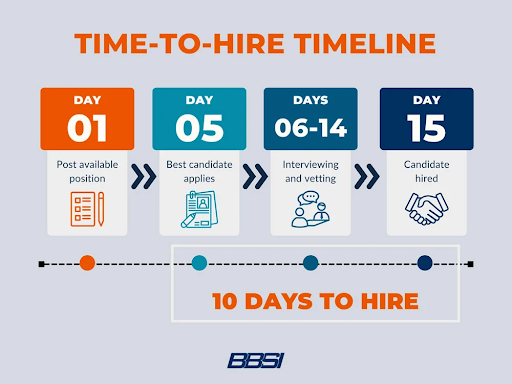
(Image Source: BBSI)
The longer it takes to hire a new employee, the more likely it is to affect project timelines. This highlights the often-overlooked link between time-to-hire and project delays.
This article explores three key reasons why a long time-to-hire can cause project delays.
1. You Don’t Have The Right Talent
Project delays are more likely to happen when a business doesn’t have the right talent in its workforce. This is because projects often require different skills at particular stages. When a critical skill is unavailable and others can’t complete the task, subsequent tasks may also have to wait.
For example, an app development project may need a specialist developer to complete a technical task before the design team can begin their creative work.
The longer it takes to hire the right talent, the longer these tasks may remain delayed.
However, when it comes to finding critical skills, it’s important not to hire the first available candidate just to reduce time-to-hire. Businesses still need to find someone with the appropriate skills and ensure they can contribute effectively once they join the team.
2. Existing Employees Are Overworked With Additional Responsibilities
Whilst equipment, technology, and materials are all needed to complete projects on time, employees are often one of your most valuable resources. They provide the skills and capacity needed to complete critical tasks, meet project deadlines, and achieve business objectives.
When a role remains vacant, the tasks and responsibilities associated with it do not just disappear. Instead, the work is often handed to existing employees.
Although this can keep the project moving in the short term, the longer a role remains vacant, the more likely you are to experience a resource gap across multiple projects. This is especially true when you move existing employees to another project to cover the responsibilities and tasks of a vacant role.
In addition, giving an existing employee more responsibilities or moving them to a different project can be even more challenging if they don’t have the right skills or knowledge.
Businesses struggling to fill vacant roles should consider upskilling or training their existing employees so they better understand their additional responsibilities and improve cooperation. When doing so, it’s essential to simplify employee training so they can become confident in their new responsibilities without unnecessary complexity or further delays.
3. Disrupts Project Planning
Project planning is essential for setting realistic timelines, allocating resources effectively, and ensuring teams have the skills needed to complete each stage of a project. When planning an upcoming project, a business may expect a new employee with a key skill to join before a particular stage begins.
However, if the recruitment process takes longer than anticipated, the project manager may need to make changes to the original timeline or redistribute tasks to existing employees.
For example, a business may plan to start their next project in June based on the expectation that a new hire will begin in May. If the role remains vacant until July, the business may have to delay the project or find temporary support.
Don’t Let Time-to-Hire Delay Projects
A long time-to-hire can create significant project delays because businesses may not have the right talent to complete certain tasks, existing employees can become overloaded with additional responsibilities, and project plans may need to be adjusted.
While businesses can’t control how quickly they find the right candidate, they can improve their hiring and onboarding processes, simplify training for existing employees, and plan projects around their current workforce rather than relying on candidates who have not yet been hired.
Ultimately, reducing the impact of time-to-hire requires businesses to look beyond recruitment alone. By preparing for potential vacancies and ensuring existing employees have the training and resources they need, businesses can keep projects moving even when hiring takes longer than anticipated.
