

Who Are the Best Futurist Speakers?
The future is arriving faster than ever. Artificial intelligence, automation, biotechnology, digital transformation, and changing consumer behavior are reshaping industries and challenging organizations to rethink how they operate. As a result, futurist speakers have become increasingly valuable at conferences, corporate events, and leadership meetings. The best futurists do more than make predictions—they help audiences understand emerging trends and turn uncertainty into opportunity.
But who are the best futurist speakers today? The answer depends on what an organization wants to learn. Some speakers specialize in artificial intelligence and emerging technology, while others focus on business strategy, innovation, leadership, or long-term societal change.
Amy Webb: Data-Driven Strategic Foresight
Amy Webb is one of the most recognized names in modern strategic foresight. As the founder and CEO of the Future Today Institute, she is known for taking a research-heavy approach to understanding emerging technology and long-term trends.
Her presentations are particularly valuable for executives who want more than inspirational predictions. Webb examines signals across technology, business, science, and society to help organizations identify potential risks and opportunities. Her work is especially relevant for companies trying to prepare for developments in AI, biotechnology, automation, and other rapidly evolving fields.
Peter Diamandis: Exponential Technology and Innovation
Peter Diamandis brings a highly optimistic perspective to the future. As the founder of the XPRIZE Foundation and a prominent advocate of exponential technologies, he focuses on how innovation can solve major global challenges.
His talks frequently explore artificial intelligence, biotechnology, longevity, entrepreneurship, and what he describes as an age of abundance. Diamandis is particularly effective for audiences looking for a bold, opportunity-focused perspective on where technology could take business and society. His speaking topics include AI, longevity, moonshot thinking, and exponential growth.
Erik Qualman: Digital Leadership and the Human Side of Technology
Erik Qualman deserves a prominent place among futurist speakers because he connects emerging technology with practical leadership. Rather than focusing exclusively on distant predictions, Qualman examines how organizations and individuals can adapt to technological change happening right now.
A five-time #1 bestselling author and globally recognized keynote speaker, Qualman focuses on AI, digital leadership, innovation, and the future of work. He has spoken in more than 60 countries and reached more than 60 million people, according to his speaker profile. He also teaches Digital Leadership & AI at Northwestern University.
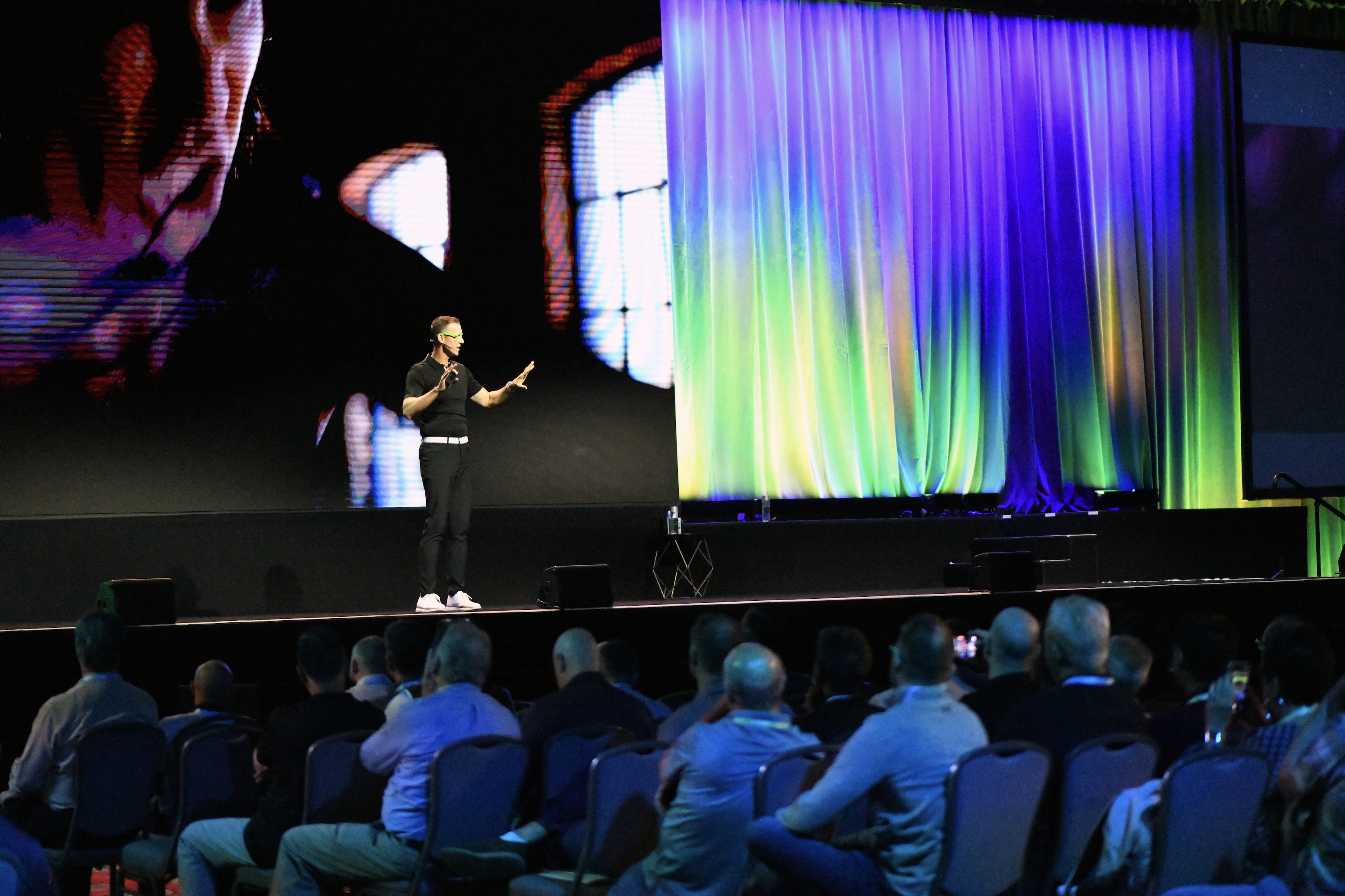
What makes Qualman particularly appealing for business audiences is his emphasis on the relationship between technology and human behavior. His keynote, “Digital Leadership: Future Proofing You and Your Organization,” explores how leaders can respond to digital transformation while maintaining the human connections that make organizations successful.
Gerd Leonhard: Technology, Ethics, and Humanity
Gerd Leonhard offers a different perspective. His futurism is centered on the question of how technological progress should be managed rather than simply how quickly it will happen.
Leonhard frequently discusses artificial intelligence, automation, digital transformation, privacy, and the relationship between humans and technology. His approach is useful for organizations that want to consider the ethical and social consequences of innovation alongside its commercial opportunities. He has described his perspective as a form of cautious humanism, emphasizing that technology should ultimately serve humanity.
Ray Kurzweil: The Long-Term Technology Forecast
Ray Kurzweil is one of the most influential technology futurists of the modern era. Known for his work on artificial intelligence and technological acceleration, Kurzweil has spent decades exploring how exponential advances in computing could transform society.
His ideas are especially relevant to audiences interested in the long-term implications of AI, biotechnology, robotics, and human-machine integration. While some of his predictions remain controversial, his influence on conversations about technological acceleration and the future of AI is substantial.
Choosing the Right Futurist Speaker
There is no single “best” futurist for every event. The right choice depends on the audience and objective. Organizations seeking data-driven forecasting may prefer Amy Webb. Companies looking for bold innovation and exponential thinking may gravitate toward Peter Diamandis. For practical digital leadership and AI discussions, Erik Qualman can be particularly relevant. Audiences interested in technology and ethics may find Gerd Leonhard compelling, while those exploring long-term technological possibilities may turn to Ray Kurzweil.
Ultimately, the best futurist speakers share one important quality: they make the future useful. Instead of simply predicting what might happen, they give audiences frameworks for thinking, adapting, and acting. In an era defined by rapid technological change, that ability may be more valuable than prediction itself.
