Can You Tell the Difference? The Blurred Line Between Human and AI Content
Not long ago, you could easily tell when a robot wrote something. The text was clunky, the tone off, and the emotion flat. But today, thanks to advances in generative AI, it’s getting nearly impossible to distinguish between human creativity and machine precision. Whether it’s an article, social post, or song lyric, AI is quietly shaping much of the content we consume— and most of us don’t even realize it.
The AI Content Explosion
AI tools like ChatGPT, Claude, and Gemini are producing everything from marketing copy to movie scripts. According to recent studies, more than 60% of marketers now use AI to create written content, and that number continues to rise.
What’s driving this explosion? Speed, scale, and cost. AI can draft an email, design a logo, or generate a video in seconds — tasks that once required hours or even days. For businesses, that efficiency is irresistible.
But there’s a flip side. As AI-generated content floods the internet, the line between what’s authentic and what’s automated keeps getting blurrier.
@heyjuanabad Iced coffee is better btw. #greenscreenvideo #ai #aigenerated #coffee #crystals #veryreal ♬ Boogie No. 69 – BADBADNOTGOOD
In the example above, one TikTok user talks about an AI-generated video being used to promote a viral new “crystal” mug. Many TikTok shop buyers purchased the mug expecting a similar-looking mug. Instead, they received a cheap, mass-produced plastic mug that looks nothing like the mug in the video. This is perhaps one of the more well-known examples of AI-generated content that fooled customers. However, with the holidays arriving, TikTok shoppers should be wary of purchasing products that specifically use AI to produce promotional videos.

When AI Feels Human
Today’s AI models don’t just mimic grammar and syntax — they replicate style. They can analyze a writer’s tone, generate emotional phrasing, and even make mistakes on purpose to appear more human. AI voice tools can laugh, pause, and breathe naturally. Video generators can create avatars with realistic eye movement and facial expressions.
In short, AI isn’t trying to sound perfect anymore. It’s trying to sound real.
This has huge implications for media trust. When an AI can write a convincing news article, compose a heartfelt apology, or post a viral video — how do we know what’s genuine? The risk isn’t just misinformation; it’s the erosion of digital authenticity.
Why Authenticity Still Matters
In an age of automation, authenticity has become the new differentiator. Consumers crave human connection. They want to feel that a brand, influencer, or leader truly means what they say — not that it came from a content generator.
That’s why many top creators and companies are shifting focus from volume to voice. Instead of churning out endless posts, they’re emphasizing storytelling, vulnerability, and personality — things that can’t (yet) be fully automated.
As Erik Qualman, author of Digital Leader, reminds us:
“We don’t have a choice on whether we digitally transform. The choice is how well we do it.”
Doing it “well” means using AI as an amplifier, not a replacement for human creativity.
Spotting AI Content: The New Digital Literacy
So, can you tell the difference? Maybe— but it’s getting harder every day. Here are a few clues that might help:
- Overly polished or generic tone: AI tends to smooth out emotion and nuance.
- Lack of lived experience: Watch for statements that sound right but lack specificity or depth.
- Odd phrasing or pacing: Subtle rhythm issues can signal AI authorship.
- Inconsistent facts or logic: Generative models can “hallucinate” false details with confidence.
That said, as detection tools improve, so do generative ones. It’s a digital arms race, and the average reader is often caught in the middle.
How to Spot AI-Generated Images
Just as text can be machine-made, so can visuals, and they’re getting equally convincing. AI image generators like Midjourney, DALL·E, and Firefly can produce photorealistic faces, flawless lighting, and perfect symmetry that even seasoned designers struggle to replicate. Still, there are a few telltale signs.
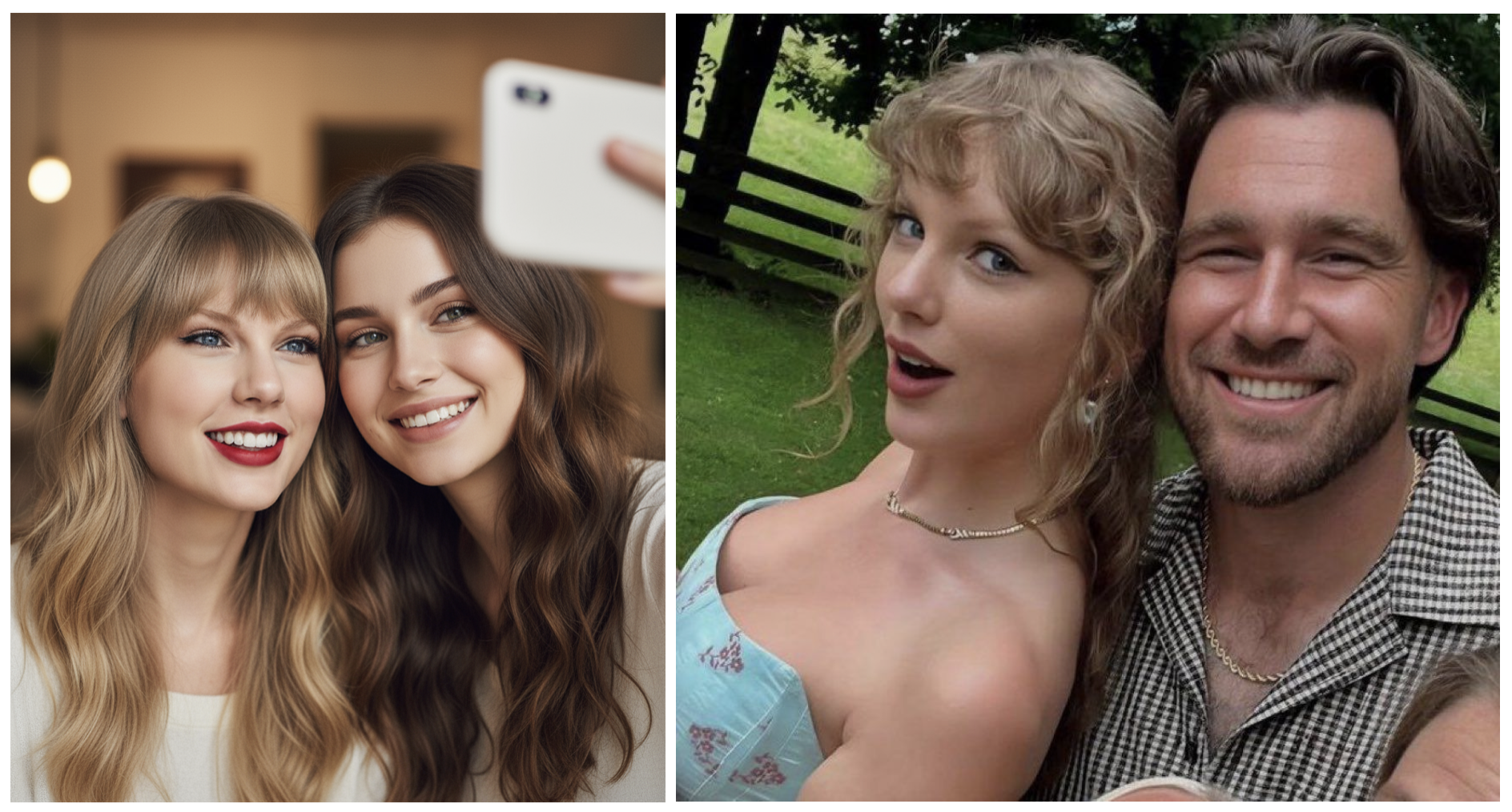
Look closely at hands, ears, and eyes— AI often struggles with small details or produces unnatural reflections. Background inconsistencies are another giveaway; patterns or text might appear distorted or meaningless.
You can also use tools like AI or Not, Hugging Face detectors, or Google’s “About this image” feature to trace origins and metadata. As these technologies evolve, visual literacy will be just as essential as media literacy, because seeing is no longer believing.
Human + AI: The Future of Creation
The real opportunity isn’t to fear AI but to collaborate with it. The most powerful creators of the future won’t be those who resist the technology, but those who use it to enhance their originality, productivity, and reach.
AI can handle the heavy lifting — the first draft, the data analysis, the design mockup. Humans can bring the heart — the insight, the empathy, the ethical compass.
Because at the end of the day, technology can replicate style, but it can’t replicate soul.