

ChatGPT’s Disruptive Arrival in Higher Education
ChatGPT has rapidly become one of the most transformative technologies to enter college classrooms. Its influence is both constructive and controversial—helping students learn more efficiently while challenging long-standing definitions of academic honesty. As universities worldwide adapt, the balance between innovation and integrity has never been more critical.
A Powerful Learning Ally for Students
For many students, ChatGPT acts as an academic lifeline. It can summarize lengthy readings, generate essay outlines, and explain complex theories in accessible terms. Non-native English speakers and students who struggle with abstract subjects often find it especially beneficial. The chatbot’s instant feedback allows learners to clarify confusion, compare academic perspectives, and structure assignments more effectively.
Used properly, ChatGPT can foster deeper understanding. It encourages exploration, supports brainstorming, and provides consistent guidance—something even the most dedicated professors cannot always offer on demand. In this sense, it serves as a supplementary tutor, enhancing comprehension and engagement across disciplines.
 The Dark Side: Academic Dishonesty and Detection Challenges
Despite its benefits, ChatGPT has also opened the door to new forms of academic misconduct. Because it can generate essays, problem sets, and discussion responses that appear original, distinguishing between student-written and AI-written work has become increasingly difficult.
Traditional plagiarism detection tools were built to identify copied text, not newly generated content. This limitation has led to widespread uncertainty among faculty. Some universities report false accusations against students due to unreliable AI-detection tools, while others struggle to prove genuine cases of misuse.
The ambiguity has created a complex ethical dilemma: when does using AI become cheating? Without consistent institutional guidance, students are left to interpret vague policies, leading to confusion and inconsistent enforcement across campuses.
Universities Respond: Redesigning Learning for the AI Era
Recognizing that banning AI is both impractical and counterproductive, universities are adapting their teaching strategies. Professors are redesigning assignments to emphasize process over product—requiring handwritten drafts, reflection essays, and oral defenses of submitted work. By assessing how students think rather than what they produce, educators make it harder for AI tools to replace authentic learning.
Simultaneously, universities are integrating AI literacy into their curricula. Courses now teach students to evaluate AI-generated content, identify bias, and use language models responsibly. This proactive approach treats ChatGPT not as a threat but as an essential skill for academic and professional success in the 21st century.
Some institutions are even forming partnerships with AI developers to ensure equitable access. Rather than forcing students to use free public versions, these collaborations allow universities to integrate AI tools within controlled environments that promote transparency and ethical use.
OpenAI’s Response: Introducing ChatGPT Study Mode
To support responsible learning, OpenAI has launched ChatGPT Study Mode, a specialized version designed to function as an educational partner. Unlike the general model, Study Mode emphasizes tutoring through dialogue. Instead of directly providing full answers, it guides students with hints, explanations, and interactive feedback.
This format encourages active engagement rather than passive consumption, reinforcing critical thinking and accountability. By turning ChatGPT into a conversation-based tutor, OpenAI aims to transform it from a shortcut tool into a legitimate academic support system.
Some universities have already begun experimenting with integrating Study Mode into their online learning systems, using it as a supplemental teaching resource. These trials aim to measure whether structured AI tutoring can enhance student performance without compromising academic integrity.
Redefining the Value of College in the Age of AI
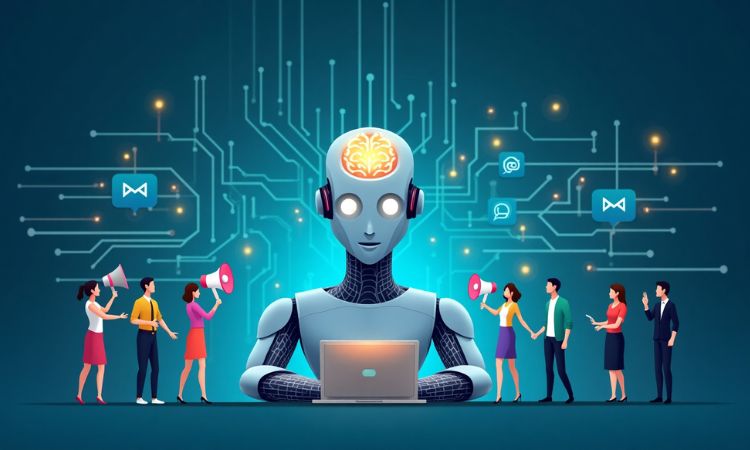
ChatGPT’s rise has forced educators to ask fundamental questions: if AI can produce essays and solve problems, what is the true value of higher education? Increasingly, institutions are redefining learning outcomes to emphasize creativity, critical thinking, and ethical reasoning—the distinctly human skills that AI cannot replicate.
Writing assignments, for example, are being reframed not as tasks to produce text, but as exercises in constructing arguments and demonstrating thought processes. The ability to reason, question, and defend ideas remains irreplaceably human, even in an age of advanced artificial intelligence.
The Future: Integrating AI While Protecting Integrity
The integration of AI into academia is not a passing trend—it marks a permanent transformation in how students learn and how universities teach. ChatGPT’s influence extends far beyond convenience; it is reshaping assessment, instruction, and the definition of originality itself.
Used responsibly, ChatGPT can democratize education by giving all students access to personalized learning support. Used irresponsibly, it risks eroding the trust and rigor that form the foundation of academic life.
The most successful universities of the future will be those that embrace both realities—leveraging AI to expand educational access while creating robust ethical frameworks that safeguard academic integrity. ChatGPT’s dual role as both tutor and temptation ensures that the conversation about technology and education has only just begun.
