

The Rise of Phantom Debt: How BNPL and Digital Wallets Change What We Owe
The End of the Revolving Credit Era?
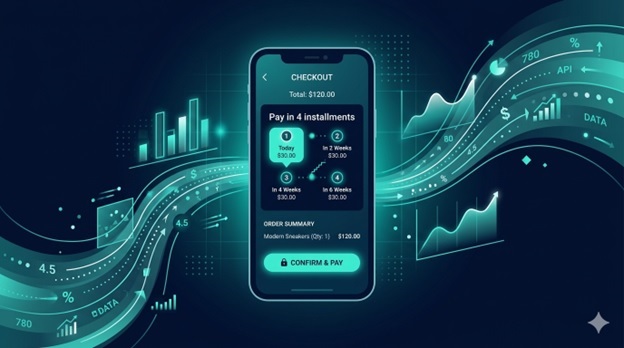 A decade ago, “Buy Now, Pay Later” was a checkout curiosity, a small button tucked beneath the credit card fields on a handful of online retailers. Today, BNPL is a $63.3 billion juggernaut reshaping the very architecture of consumer credit across the globe (Congressional Research Service, 2025).
The shift is seismic and it is not just about payment mechanics. Traditional credit, the kind that shows up neatly on your Equifax report, that arrives as a paper statement each month, that your mortgage lender can see in a single pull, is steadily being displaced by something far less visible. Digital installments. One-tap wallet loans. Split-pay options embedded so seamlessly into the checkout flow that many consumers don’t even register them as debt.
This is not simply a fintech trend. It is a fundamental restructuring of household debt, one defined by seamlessness, invisibility and what researchers are now calling “phantom obligations.”
The question facing regulators, lenders and consumers alike is no longer whether this transformation is happening. It is whether anyone can see the full picture before the consequences become irreversible.
The Macro Growth of BNPL (2024–2026)
The numbers are difficult to overstate.
According to data compiled by Fortunly and the Consumer Financial Protection Bureau (CFPB), the U.S. BNPL market has reached 53.6 million unique users as of early 2025, with the average active user taking out multiple installment loans per year. Global transaction volume surpassed $334 billion in 2024 and projections suggest it will exceed $450 billion by the end of 2026.
Who Is Driving This Growth?
The demographic engine is unmistakable. Gen Z and Millennials account for the overwhelming majority of BNPL adoption and their relationship with the product is fundamentally different from how older generations viewed credit cards.
A 2024 PYMNTS.com survey found that nearly 50% of Gen Z BNPL users describe the service as a “budgeting tool” rather than a form of borrowing. They see four interest-free installments as financial discipline, a way to avoid the compounding interest traps of revolving credit that burdened their parents.
Whether that perception matches reality is a different question entirely.
Beyond Retail: BNPL Enters Essential Spending
Perhaps the most consequential shift between 2024 and 2026 is where BNPL is being used. What began in fashion and electronics has expanded aggressively into:
- Healthcare (dental procedures, elective surgeries, therapy sessions)
- Travel (flights, hotel bookings, vacation packages)
- Groceries and everyday essentials (via integrations with platforms like Instacart)
When consumers use installment plans for discretionary purchases, the systemic risk is contained. When they start splitting grocery bills into four payments, it signals something deeper about household financial stress.
The Rise of “Phantom Debt”

Here is the core problem that keeps credit analysts awake at night: most BNPL debt is invisible to the traditional credit reporting ecosystem.
Equifax, Experian and TransUnion, the three bureaus that underpin virtually every lending decision in the United States, have historically not captured BNPL obligations in their standard consumer files. While some providers have begun voluntary reporting, the coverage remains fragmented and inconsistent.
The result is what researchers have termed “phantom debt”, financial obligations that are real, recurring, and legally binding, but that do not appear in the data systems lenders use to assess creditworthiness.
Why This Matters
Consider a consumer applying for a mortgage. Their credit report shows a clean profile: a single credit card with a low balance, no delinquencies, a healthy score. What it doesn’t show is five active BNPL plans across three different providers, totaling $2,800 in outstanding obligations.
The mortgage lender cannot see this debt. The consumer may not even think of it as debt. And by the time financial distress surfaces, it is, as the Digital Credit Transformation paper notes, “well advanced.”
The “Silent Wallet” Effect
There is a behavioral dimension as well. Research in behavioral economics has consistently demonstrated that digital payment methods reduce the psychological “pain of paying” compared to physical cash. When you hand over a $100 bill, you feel it. When you tap a screen and see “4 easy payments of $25,” the friction and the awareness, evaporates.
Studies from the MIT Digital Currency Initiative confirm that consumers using digital and contactless payment modes spend 12–18% more per transaction than those using cash. BNPL amplifies this effect further by fragmenting the total cost across time, making the true financial commitment even harder to perceive at the moment.
The Surprising Link: P2P Payments and Household Debt
The BNPL conversation often overshadows an equally important development: the role of peer-to-peer (P2P) payment apps, Venmo, Zelle, Cash App, PayPal, in reshaping household debt patterns.
The Spinwheel Correlation
Research from Spinwheel (now part of Mastercard) revealed a striking correlation: users of P2P payment apps carry significantly higher debt levels than non-users, even after controlling for income and age. The relationship is not merely demographic. The ease of digital money movement appears to facilitate a form of “informal finance”, borrowing between friends, family members and social contacts, that exists entirely outside institutional oversight.
A friend Venmos you $500 to cover rent this month. You Cash App a colleague $300 for concert tickets you cannot quite afford. These micro-loans are real financial obligations, but they appear on no credit report, no bank ledger and no regulatory radar.
The BNPL Connection
The Spinwheel data also uncovered that P2P app users are nearly three times as likely to use BNPL services compared to non-users. This suggests a behavioral profile: consumers who are comfortable with digital financial tools tend to layer multiple forms of informal and formal digital credit simultaneously, further obscuring their true debt-to-income ratio.
BNPL vs. Credit Cards: A Changing Balance
One of the most debated questions in consumer finance is whether BNPL is replacing credit cards or simply adding another layer of debt on top of them.
The Substitution Theory
There is evidence for substitution. PYMNTS.com data from late 2024 shows that BNPL usage rises measurably when consumers’ credit card balances increase. This suggests that at least some consumers turn to BNPL as a relief valve, seeking interest-free installments when their revolving credit costs become painful.
With average credit card APRs hitting record highs above 22% in 2025 (Federal Reserve), the appeal of a 0% four-payment plan is self-evident.
The Layering Reality
However, the substitution narrative is incomplete. CFPB research indicates that a significant proportion of BNPL users carry active credit card balances simultaneously. Rather than replacing expensive debt with cheaper debt, many consumers are simply accumulating both, visible revolving credit on their bureau files and invisible installment obligations off the books.
The net effect is a consumer who appears less leveraged than they actually are, a dangerous illusion for both the individual and the institutions extending further credit based on incomplete data.
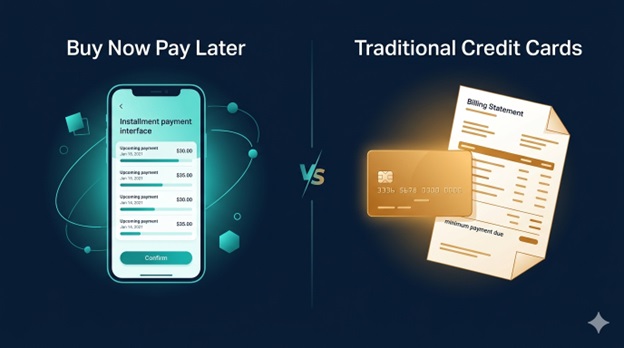
A Quick Cost Comparison
| Factor | BNPL (Pay-in-4) | Credit Cards |
| Typical APR | 0% (if paid on time) | 20–28% |
| Late fees | $5–$15 per missed payment | $25–$41 |
| Credit reporting | Partial/inconsistent | Full reporting |
| Spending visibility | Fragmented across providers | Single monthly statement |
| Regulatory oversight | Emerging/limited | Extensive (TILA, CARD Act) |
The cost advantage of BNPL is real, but only when payments are made on time. Miss a payment and the fee structures, while smaller individually, can compound across multiple simultaneous plans.
The 2026 Regulatory Crackdown
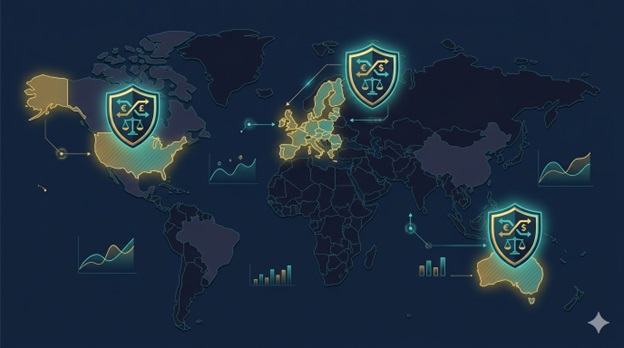
Regulators worldwide have spent 2024 and 2025 studying the BNPL phenomenon. In 2026, they are acting.
The EU: Consumer Credit Directive II (CCD II)
The European Union’s Consumer Credit Directive II, set for full implementation by November 2026, represents the most comprehensive regulatory response to date. Under CCD II:
- Interest-free, short-term BNPL loans will be brought under the same regulatory framework as traditional consumer credit.
- Providers must conduct full creditworthiness assessments before extending offers.
- Consumers will receive standardized pre-contractual information, eliminating the opacity that currently defines many BNPL checkout flows.
This is a landmark shift. For the first time, a major regulatory bloc is declaring that the absence of interest does not mean the absence of risk (European Council, 2023).
The UK and Australia
The UK’s Financial Conduct Authority (FCA) has confirmed that BNPL products will require full FCA authorization under forthcoming regulations, including affordability checks and clear dispute resolution processes.
Australia’s ASIC (Australian Securities and Investments Commission) has gone further, implementing licensing requirements for BNPL providers that mirror those applied to traditional credit providers, specifically aimed at preventing “debt spirals” among vulnerable consumers.
The United States: CFPB’s Evolving Stance
The CFPB has signaled its intent to treat BNPL providers similarly to credit card issuers under the Truth in Lending Act (TILA). This would mandate standardized disclosures, dispute resolution rights and, critically, consistent credit reporting requirements that could finally bring phantom debt into the light.
The regulatory direction across all major markets is converging on a single principle: if it functions like credit, it must be regulated like credit.
Risks on the Horizon: Defaults and Charge-offs
The growth story of BNPL is compelling. The risk story is equally important.
The Default Data
CFPB data from 2025 reveals that BNPL default rates significantly exceed those of traditional credit cards, particularly among users with multiple active plans. Late fees, while individually modest, are generating substantial revenue for providers, raising questions about whether fee income has become a business model rather than a deterrent.
Industry reports indicate that charge-off rates for BNPL portfolios have been climbing steadily since 2023, with some providers writing off loan losses at rates that would trigger regulatory intervention in traditional banking.
What anecdotal data reveals
Financial counselors report a consistent pattern among distressed clients: the debt that brings them in for help is rarely a single large obligation. It is seven or eight small BNPL plans, for clothing, electronics, beauty products, even takeout food, that individually seemed manageable but collectively became overwhelming.
The industry has informally termed this the “colorful socks” problem: no one goes into financial distress buying socks, but dozens of small, impulsive, frictionless purchases can quietly create a crisis.
Proactive Intervention: The Banking Response
Forward-looking financial institutions are not waiting for defaults. Companies like Latinia are deploying “Next Best Action” real-time decisioning engines that analyze transaction patterns, flag early warning signals and trigger proactive outreach to at-risk customers before they miss payments.
This represents a shift from reactive collections to preventive financial health, a model that benefits both institutions and consumers and one that will likely become standard practice by 2027.
Navigating the New Debt Landscape
The digital transformation of consumer credit is permanent. BNPL and digital payment tools offer genuine benefits, lower costs, greater flexibility and broader access to credit for consumers underserved by traditional banking. These advantages are real and should not be dismissed.
But the invisibility of this new debt architecture is its defining risk. When consumers, lenders and regulators cannot see the full picture of household obligations, the system is flying blind and history has shown what happens when credit markets operate on incomplete information.
For Consumers
Transparency starts with self-awareness. Track every active BNPL plan. Add installment obligations to your monthly budget alongside rent, utilities and credit card payments. If you cannot list every payment you owe from memory, that is itself a warning sign.
For Regulators
Data integration is the next frontier. Bringing BNPL obligations onto standardized credit reports is not just a regulatory preference, it is a systemic necessity. The phantom debt problem cannot be solved if the data remains invisible.
For the Industry
Sustainable growth requires honest risk assessment. The BNPL providers that thrive in the post-regulatory landscape of 2026 and beyond will be those that build trust through transparency, not those that grow by exploiting the gaps in consumer awareness and regulatory oversight.
The way we borrow has changed. The question now is whether the systems designed to protect us can keep up.
