

B2B Marketing Use Case, Story, and Examples
B2B marketing has transformed into a strategic engine that guides how businesses attract, educate, convert, and retain customers. Unlike traditional marketing, where decisions can be instant and emotion-driven, B2B buying journeys are longer, complex, and heavily influenced by trust, data, and value demonstration. A modern marketer must understand not just what strategies work, but why they work, how they are applied, and what real-world outcomes look like when executed well.
In this article, we explore B2B marketing use cases, marketing stories that illustrate real scenarios, and examples supported by structured tables. We also highlight tools that can improve performance and create repeatable processes for growth.
Understanding Modern B2B Marketing
B2B marketing today isn’t just about acquiring customers, it’s about building long-term relationships with decision-makers who evaluate your brand from every possible angle. Buyers compare competitors, examine case studies, evaluate ROI, and consume multiple pieces of content before moving forward. This makes strategic alignment across marketing, sales, and product teams essential.
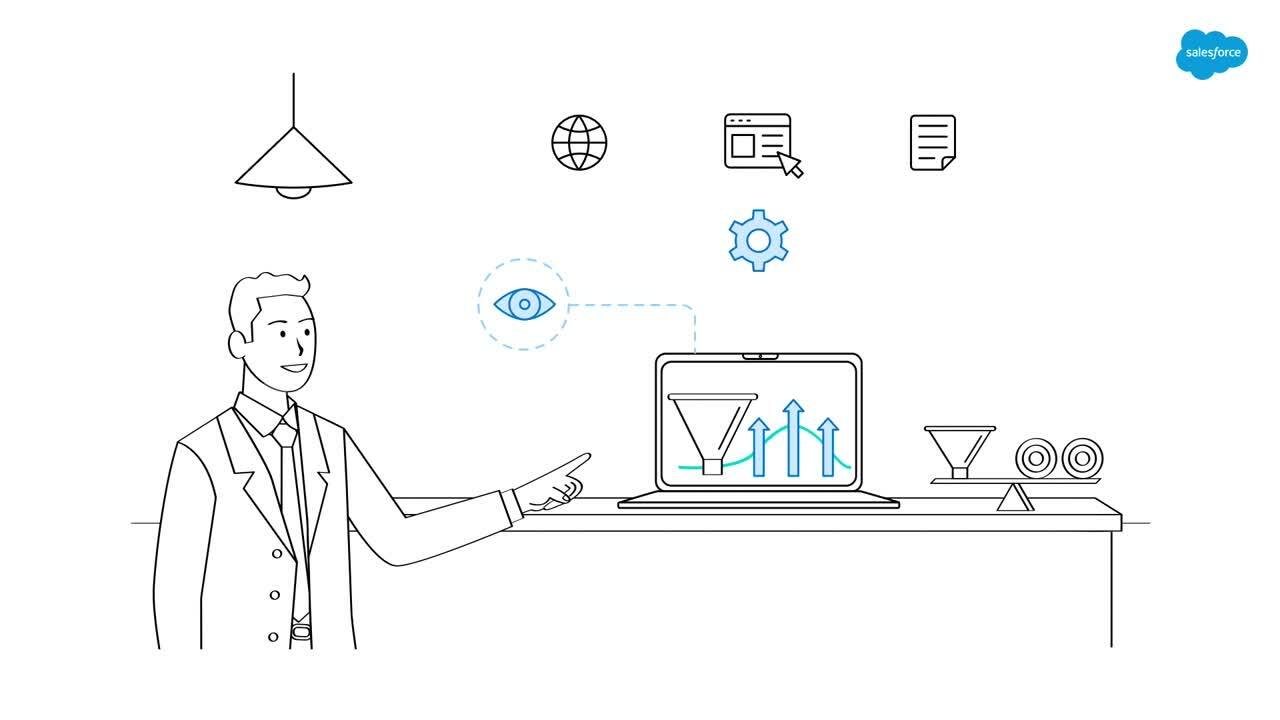
Modern B2B marketing focuses on creating meaningful experiences across each stage of the funnel, awareness, evaluation, consideration, intent, purchase, and post-purchase expansion.
Major B2B Marketing Use Cases
Lead Generation and Demand Creation
Lead generation remains the starting point of most B2B marketing operations. Businesses continually need new prospects entering the pipeline. Demand creation begins even earlier, focusing on building awareness and interest in problem areas before prospects actively search for solutions.Effectively executing this stage validates whether a new B2B business idea has true market potential before scaling investment.
Instead of pushing products, companies introduce fresh insights, industry research, comparisons, and helpful content that nurtures curiosity and positions the brand as a valuable source of knowledge. When done well, this stage creates market authority and trust, reducing friction during conversion.
To give shape to these programs, businesses typically use tools like HubSpot, Clearbit, LinkedIn Campaign Manager, and ZoomInfo, allowing them to collect data, manage outreach, create targeted ads, and understand buyer intent. SEO initiatives like AI backlinks also support demand generation by strengthening domain authority and driving long-term organic visibility.
 Lead Nurturing and Buyer Education
Most B2B prospects will not convert immediately, even if they find your solution interesting. They require consistent communication that explains benefits, offers solutions to their concerns, and answers their questions in a non-promotional way. Lead nurturing becomes the bridge between interest and conversion.
Companies create content that gradually educates prospects, industry guides, comparisons, tutorials, whitepapers, and product walk-throughs. Email campaigns and retargeting messages help maintain visibility. Tools like Mailchimp, ActiveCampaign, or Marketo assist marketers in delivering personalized nurture flows based on user behavior.
When nurturing is done correctly, prospects naturally move from passive learners to active evaluators.
Account-Based Marketing (ABM)
Account-Based Marketing has rewritten the approach to B2B targeting. Instead of aiming broadly, companies identify a set of high-value accounts and create tailored campaigns specifically crafted for them. These accounts are usually businesses with large deal potential or long-term enterprise value.
ABM aligns marketing and sales to analyze pain points, identify decision-makers, and tailor outreach for maximum relevance. Personalized landing pages, account-level ads, customized offers, and dedicated communication channels are commonly used.
Tools like 6sense, Demandbase, and Terminus help execute ABM at scale, identifying signals, recommending engagement sequences, and providing account insights that enhance precision.
Content Marketing for Awareness, Credibility, and Lead Conversion
Content marketing remains at the center of B2B engagement. Businesses want proof, not slogans. They want insights, not promises. B2B Content marketing offers a structured way to deliver this value.
Companies develop blog articles, research reports, industry analysis, customer stories, and expert interviews. Thought leadership establishes authority and encourages buyers to trust your expertise before trusting your product. Content also influences SEO, brand positioning, and lead nurturing.
Unlike B2C content, B2B content focuses more on evidence, frameworks, ROI, technical explanation, and problem clarification.
Product Marketing and Feature Adoption
For B2B SaaS companies, attracting a new customer is only the beginning. Real growth comes from helping users adopt features, discover product value, and stay engaged over the long term.
Product marketing teams create messaging frameworks, competitor comparisons, walkthrough guides, release announcements, onboarding flows, and education materials. Businesses use tools like Intercom, Notion, and Productboard to coordinate product narratives and ensure the value proposition is consistent across teams.
Customer Retention, Upsell, and Lifetime Value
Retention has become one of the most strategic areas in B2B marketing. Acquiring new customers is expensive, and losing an active customer is significantly more costly than failing to acquire one.
Marketers collaborate with customer success teams to design onboarding programs, check-in workflows, tutorials, and newsletters that maintain engagement and encourage customers to explore more features. The stronger the relationship is after purchase, the more likely customers are to grow with your product and buy additional services.
Tools such as Gainsight, Customer.io, and Totango help companies track engagement and automate touchpoints.
B2B Marketing Stories (Detailed Narratives)
Stories help understand how marketing concepts work in real situations. Here are three detailed B2B marketing success stories.
 Story 1: How a SaaS Company Generated 3,000 Leads With One Research Report
A SaaS startup offering workflow automation faced challenges reaching qualified audiences due to high cost-per-click rates on paid ads. Their brand lacked authority in a space dominated by bigger competitors.
The marketing team decided to invest in a deep, data-driven industry report titled Automation Trends and Workflow Intelligence 2025. The report analyzed how companies saved time and money using workflow automation. To promote the report, they launched a landing page, coordinated LinkedIn awareness posts, partnered with industry communities, and sent outreach emails to niche audiences.
As part of their research, the team also explored AI app development costs to identify another avenue for enhancing their offerings. The report became a talking point among professionals, leading to thousands of downloads. Within two months, the company generated over 3,000 leads, 340 demo requests, and closed several enterprise deals. This story demonstrates that when strategically positioned, one strong content asset can drive exponential growth.
Story 2: A Cybersecurity Company Secures a Fortune 500 Client With ABM
A cybersecurity firm aimed to acquire a Fortune 500 enterprise but struggled with limited visibility. Traditional outreach attempts went unnoticed.
The team built an Account-Based Marketing plan targeting stakeholders across IT, security, operations, and compliance. They began by analyzing the company’s architecture, previous vulnerabilities, and potential security risks. They then created personalized security risk assessments, custom landing pages, and executive-level whitepapers repositioned specifically for that enterprise. Sales conducted multi-channel touchpoints using LinkedIn outreach and targeted email sequences.
The hyper-personalized approach caught the attention of key executives. Within weeks, the company agreed to a workshop, which resulted in a multi-year contract valued in millions. This story highlights how personalization and precision can unlock major business opportunities.
Story 3: Reducing Churn Through Customer Education
A B2B manufacturing software provider faced recurring churn due to poor onboarding. Customers struggled to understand the platform despite its powerful features.
The marketing team collaborated with customer success to design a structured onboarding program. They created a set of video tutorials, guided walkthroughs, product use cases, and a weekly onboarding newsletter. They simplified technical documentation and designed a dedicated knowledge base with real customer examples.
Within three months, churn fell by 17 percent, customer satisfaction increased, and customers started adopting advanced features more frequently. This story shows that retention requires consistent education and guidance, not just product quality.
Examples of B2B Marketing Activities
| Area | Example | Purpose | Outcome |
| Content Marketing | Publishing an industry report | Educate and build credibility | Increased top-of-funnel leads |
| ABM | Personalized landing page for high-value clients | Target key accounts | Higher enterprise conversions |
| Email Marketing | Onboarding sequence | Improve adoption | Reduced churn |
| Paid Ads | Google search campaigns | Capture high-intent traffic | More demo bookings |
| SEO | Comparison blogs | Attract problem-aware users | Long-term organic growth |
| Product Marketing | Feature announcement emails | Boost engagement | Higher product usage |
Commonly Used B2B Marketing Tools
Below are some of the most effective tools used across the industry, with clear details on how they support B2B growth.
HubSpot
HubSpot is one of the most widely used platforms in B2B marketing because it integrates CRM, email marketing, automation, content management, and analytics under one ecosystem. It helps marketing teams track prospects from first touch to deal closure, automate workflows, and personalize content based on behavior. HubSpot is especially valuable for nurturing high-intent B2B prospects through multi-step journeys.
Salesforce
Salesforce helps B2B companies manage long sales cycles and large accounts with multiple stakeholders. Its automation features, reporting dashboards, lead scoring, and custom objects make it a favorite for enterprise-level marketing and sales teams. The platform’s integrations support advanced ABM (Account-Based Marketing) strategies.
LinkedIn Campaign Manager
LinkedIn is the top platform for B2B lead generation, especially when targeting decision-makers, industry experts, or niche business roles. Its Campaign Manager lets marketers run highly targeted ads based on job role, seniority, industry, skills, and company size. This precision makes LinkedIn ideal for promoting whitepapers, webinars, and product demos.
SEMrush
SEMrush helps B2B marketers identify keyword opportunities, track rankings, study competitors, and optimize their content strategy. Since B2B decision-makers rely heavily on research and comparison, having a strong SEO presence is essential. SEMrush also supports backlink tracking, site audits, and content gap analysis.
Mailchimp
Mailchimp remains one of the easiest platforms for B2B email marketing. It offers segmentation, automation, behavioral triggers, and analytics. Although simpler than HubSpot, it is ideal for SMBs that want professional email campaigns without the complexity of enterprise tools.
ZoomInfo
ZoomInfo gives access to verified B2B contacts, company details, buying signals, and technographic data. It helps sales and marketing teams identify high-quality prospects, personalize outreach, and target accounts showing active interest in similar solutions.
Slack
Slack improves communication within B2B marketing teams by centralizing discussions, project updates, and integrations with tools like HubSpot, Google Analytics, and Asana. Faster communication leads to faster campaign execution and clearer alignment between marketing and sales.
Conclusion
B2B marketing has evolved into a sophisticated system where content, personalization, automation, and customer-centric strategies work together to drive measurable results. Whether businesses aim to generate demand, nurture prospects, target high-value accounts, or retain customers, every stage connects to a structured strategy supported by real use cases and proven examples.
Companies that tell compelling stories, educate their audiences, invest in long-term trust, and use the right tools position themselves for sustained success. Modern B2B marketing is ultimately a partnership between marketers, sales teams, product leaders, and customers, each contributing to a seamless journey that converts interest into meaningful business impact.
