

Medical Tourism Is the New Middle-Class Healthcare Hack
I did not come to Thailand expecting a lesson in how broken the American healthcare system truly is. I came because my son needed braces, and back home, the quote nearly made me stop breathing. Almost four thousand dollars for a mouthful of metal. Four thousand for something his dentist described as “routine.” Four thousand for a child who still loses his shoes at school and asks for snacks every thirty minutes.
Still, taking care of your kids is not optional. So I did what most American parents do. I tightened my budget. I shifted bills. I convinced myself I would figure it out. That is what families do. We stretch.
The Moment I Started Considering Care Abroad
Eventually, after months of stretching, something in me snapped. I started researching alternatives. I looked at Mexico first, then Colombia. Then someone in a Facebook parenting group mentioned Bangkok. She said her daughter got braces there for less than what she paid for a semester of piano lessons. She said the clinic was spotless and the staff were kind. She said it changed everything for her budget.
Honestly, at first, it sounded unbelievable. But the more I read, the more it made sense. Studies that compare health costs across countries, like this OECD dataset, show how drastically prices differ: https://data.oecd.org/healthres/health-spending.htm. Thailand has become a global medical hub, known for dental work, cosmetic surgery, fertility treatments, and full-body checkups. Families from Europe, Australia, the Middle East, and Asia fly there for modern, safe, and predictable care. And slowly, American families have started to join them.
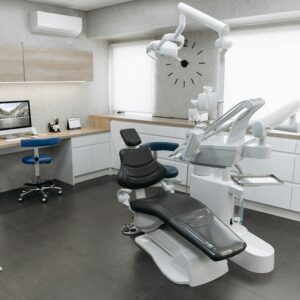
The Price Difference Between U.S. and Thailand Care
I booked the trip.
Walking into that Bangkok clinic felt like stepping into a different version of what healthcare could be. The lobby was bright and airy. The staff greeted us like we were guests, not case files. The receptionist spoke softly, smiled easily, and handed my son a sticker before she handed me a clipboard. No frantic phones were ringing. No frustrated patients arguing about insurance coverage. No long wait times. It felt like everyone had time.
That alone was disorienting.
Then, when the receptionist pulled up my son’s appointment details, she said the entire orthodontic treatment would cost six thousand baht. I nodded politely, pretending I knew what that meant. Then I opened my currency app.
One hundred eighty-five dollars.
Not per visit.
Not per bracket.
Not as a “down payment.”
The entire treatment plan.
Immediately, when I asked her to confirm, she didn’t flinch. She even added that if I preferred, I could pay in monthly installments of about $32.
I stood there holding my phone, watching my son swing his legs in the waiting room chair, fully unaware that his mother was having a moment that would change the way she viewed the American healthcare system forever.
At that moment, the numbers stopped being numbers. They became clear. They became sane. They became confirmation that something in the United States is deeply off.
People often assume medical tourism is about finding the cheapest care. But what I felt in that moment was something much more powerful. I felt relieved. Relief that the math finally made sense. Relief that I didn’t have to contort my budget to do something as basic as getting braces for my child. Relief that I didn’t feel punished for being a parent.
The truth is simple. A growing number of American families are traveling abroad for care, not because they want an adventure, but because they want predictability. The CDC notes this rising trend in its medical tourism guidance: https://wwwnc.cdc.gov/travel/page/medical-tourism. They want transparency. They want to know the price before they commit. They want to walk into a clinic and feel like the system is working with them, not against them.
Why Medical Tourism Is Growing for American Families
In the United States, even families with insurance feel like they are walking through a maze. Deductibles climb every year. Premiums increase without warning. Bills arrive months later with charges that read like a foreign language. Even when you try to advocate for yourself, you end up speaking to three different departments that give you three different answers. And somehow, even after doing everything “right,” you still owe money you didn’t expect.
More importantly, middle-class families especially feel the squeeze. They make too much to qualify for assistance and too little to absorb the rising costs comfortably. They live in the gap—the impossible one.
Over time, that gap is why medical tourism has grown beyond cosmetic surgery and spa-like recovery centers. It has become a financial strategy. A necessity. A way for families to push back against a system that places the burden entirely on them.
The Difference I Saw While Living in Bangkok
During our month in Bangkok, I began to understand the emotional difference between a system designed for clarity and one intended for profit. I scheduled a comprehensive medical checkup at a private hospital. In the United States, a thorough checkup like the one I received costs between $3,000 and $6,000, depending on the provider, city, and insurance plan. In Bangkok, it was fifteen hundred dollars. That included every test, every scan, and a long conversation with a doctor who actually looked me in the eye.
Healthcare in Thailand didn’t feel rushed. It didn’t feel cold. It didn’t feel like everyone was trying to get through a checklist as fast as possible. It felt human.
Eventually, that alone made me realize how much I had normalized stress in the U.S. system, how much I had accepted confusion, how much I had accepted chaos. How much I had accepted little moments of disrespect that pile up over time until you no longer notice them.
But here, in Bangkok, I noticed how different it felt to be treated like a person.
Real Families Choosing Care Abroad
One afternoon, while my kids were napping, I sat outside on our Airbnb balcony and thought about the American families who would never even consider traveling abroad for healthcare. Not because they don’t want to. But because the idea feels too foreign, too risky, too unconventional. I understood that mindset. I had it once, too.
So I started paying attention. I talked to people. I listened.
I met a woman from Ohio who flies to Bangkok every two years for dental work. Cleanings, a crown, and a whitening treatment cost her less than a single crown in the United States. She told me she doesn’t tell many people back home because she doesn’t want to be judged. But she said her teeth have never been healthier.
I met a couple from Australia who traveled to Thailand for IVF treatments. Their insurance back home partially covers fertility care, but the waitlists are long and the costs are unpredictable. In Thailand, they know exactly what they will pay before they start.
I met an American retiree who flew to Bangkok for knee surgery because the U.S. hospital wanted him to pay nearly fourteen thousand dollars out of pocket before insurance would even begin covering anything. In Bangkok, the procedure cost him five thousand dollars total and included physical therapy.
None of these people were reckless. None were uninformed. They researched. They checked accreditation. They talked to past patients. And they made decisions based on clarity, not desperation.
The more stories I heard, the more I understood the quiet shift happening among American families. Medical tourism isn’t fringe anymore. It is becoming a middle-class response to an impossible system.
Medical tourism is not about avoiding American healthcare entirely. It is about escaping the parts of the system that have become unpredictable, confusing, and financially punishing. It is about finding a different way to meet needs that feel impossible to meet at home.
As the days went by, I noticed how easily healthcare was integrated into everyday life in Bangkok. Pharmacies were everywhere. Clinics sat inside malls next to bubble tea shops and bookstores. Walk-in imaging centers were open late into the evening. You could run errands, get a dental cleaning, grab dinner, and still have time left in your day. Care blended into daily life without disrupting it.
Back home, an appointment often swallows your entire day. You take off work. You fight traffic. You fill out the same forms you filled out last time. You wait. You wait some more. And after all of that, you still may not get clear answers.
One day, after finishing my own checkup, I wandered through a Bangkok mall and saw a father and daughter leaving a dental clinic together. The little girl carried a balloon. They stopped to look at toys, then shared a bowl of noodles in the food court. Nothing about it felt stressful. It felt normal. I realized how rare that feeling had become for me.
American families spend so much time navigating the healthcare system that they forget healthcare is supposed to support their lives, not consume them.
What I kept coming back to was the emotional cost of care in the U.S. The worry parents feel before appointments. The fear of opening the mailbox. The stress of explaining a bill you do not understand. The frustration of knowing that even after paying premiums every month, you still owe hundreds or thousands as soon as you actually use the system.
That emotional cost is real. It shapes how families live, parent, work, and plan for the future.
Bangkok made me see how unnecessary that stress is.
How Medical Tourism Changes the Math for Parents
One evening, while the kids watched a movie on Airbnb, I sat at the small dining table and wrote down every healthcare expense I had avoided by traveling abroad. Braces for one hundred eighty-five dollars. A complete medical exam for fifteen hundred dollars. A dental cleaning for myself that costs the equivalent of twenty-five dollars.
Then I compared those numbers to the quotes I received in Atlanta. The difference wasn’t a few dollars. It was thousands. And thousands matter. Thousands change decisions. Thousands determine whether you save or fall behind.
Medical tourism changes the math. But more importantly, it changes the mindset.
As I added up the numbers, I realized something else. Going abroad for care had freed me from a kind of financial fear I didn’t even know I was carrying. I felt calmer. Clearer. Less braced for something to go wrong.
Healthcare should not require courage. But in the U.S., it often does.
Toward the end of our trip, we returned to the orthodontic clinic for my son’s follow-up appointment. The orthodontist greeted him by name, asked him about his week, and checked his teeth with the same gentle confidence she’d shown before. When she was done, she said everything looked perfect.
Then she handed me the same printed fee sheet she’d given me on day one. No changes. No extra charges. No surprises.
Paying that bill felt like exhaling.
As we stepped outside into the warm Bangkok air, my son looked up at me and said, “I didn’t know braces could be this easy.”
He wasn’t talking about the brackets. He was talking about the process. The clarity. The calm. Kids sense everything. They feel your tension. They hear the worry in your voice. They notice when something is stressing you even when you think you’re hiding it.
And my child had noticed that for once, I wasn’t stressed about healthcare.
That sentence stayed with me in a way I didn’t expect. Because it was honest, and it was true.
The hardest part of American healthcare isn’t the paperwork or the bills. It’s the way it makes families feel unsafe. The way it makes parents second-guess what they can afford. It forces people to choose between their health and their financial stability.
Medical tourism won’t fix the U.S. system. But it gives families options that feel sane.
Throughout my time in Thailand, I kept thinking about the conversations I’d had with other families, the mother who flew in for dental work. The couple is undergoing IVF. The retiree needs knee surgery. The expat said she would never return to the States for any non-emergency procedure.
These families weren’t reckless. They weren’t avoiding responsibility. They were doing what the system back home made nearly impossible. They were finding care they could trust at a price they could plan for.
And that trust is what the U.S. system has lost.
Trust is earned when care is consistent, when prices match estimates, and when providers communicate clearly. When insurance actually protects families.
Trust disappears when you receive a bill for services you didn’t understand, when your insurance denies coverage because of a vague policy detail, or when you spend hours on the phone being transferred from one department to another. When you walk into every appointment knowing there may be a financial hit you could not possibly predict.
The decision to travel abroad for medical care is not about leaving home. It is about finding a system that doesn’t ask you to sacrifice your peace to receive basic care.
It is about believing you deserve clarity.
It is about believing healthcare should not bankrupt you.
It is about believing your children deserve access without stress.
And once you experience that kind of clarity, it is hard to accept anything less.
On our final week in Bangkok, we took a tuk-tuk ride through the city. Noire laughed every time we sped up. My son pointed out temples and neon signs. And I sat there thinking about how different this month had been from what I expected.
I came for braces.
I left with a new understanding of what healthcare could feel like.
I realized I was calmer. I was thinking more clearly. I wasn’t carrying the weight of a four-thousand-dollar bill in the back of my mind. I was present with my kids. I was enjoying the city. I was breathing in a way I hadn’t breathed in a long time.
And that made me ask the biggest question of all.
If another country can make the process this simple, this predictable, this human, then why can’t my own?
That question isn’t political. It isn’t emotional. It is practical.
Families just want care that makes sense.
They want bills they understand.
They want systems that feel fair.
Medical tourism is not a luxury for the wealthy. It is becoming a lifeline for the middle class. It is how families protect themselves in a system that keeps failing them.
When we boarded our flight back to the United States, I felt grateful. Not because everything was perfect, but because I had proof that healthcare could feel different. That it could feel calm. That it could feel clear. That it could feel humane.
Medical tourism showed me that better systems exist.
And it showed me that American families deserve better, too.
Sometimes the most affordable care isn’t the closest.
Sometimes the most straightforward path is across the world.
And sometimes that journey gives you back a kind of peace you didn’t know you were missing.
And as families rely more on technology to guide these decisions, this breakdown of the top tech trends for parents offers helpful context.
