

Why Generative AI Is the Future of Innovation and Creativity
One AI tool can write a paragraph. Another can create a logo. Yet another can compose a melody. Each performs its task well. But can any of them truly innovate? Can they ideate, iterate, and refine without constant human instruction? That is the frontier where generative AI now operates.
Generative AI isn’t just a tool. It’s a collaborator. It’s a partner in creation. It doesn’t only follow prompts—it suggests possibilities. It doesn’t only produce outputs—it explores alternatives. The evolution of these models is rewriting what creativity and innovation can mean.
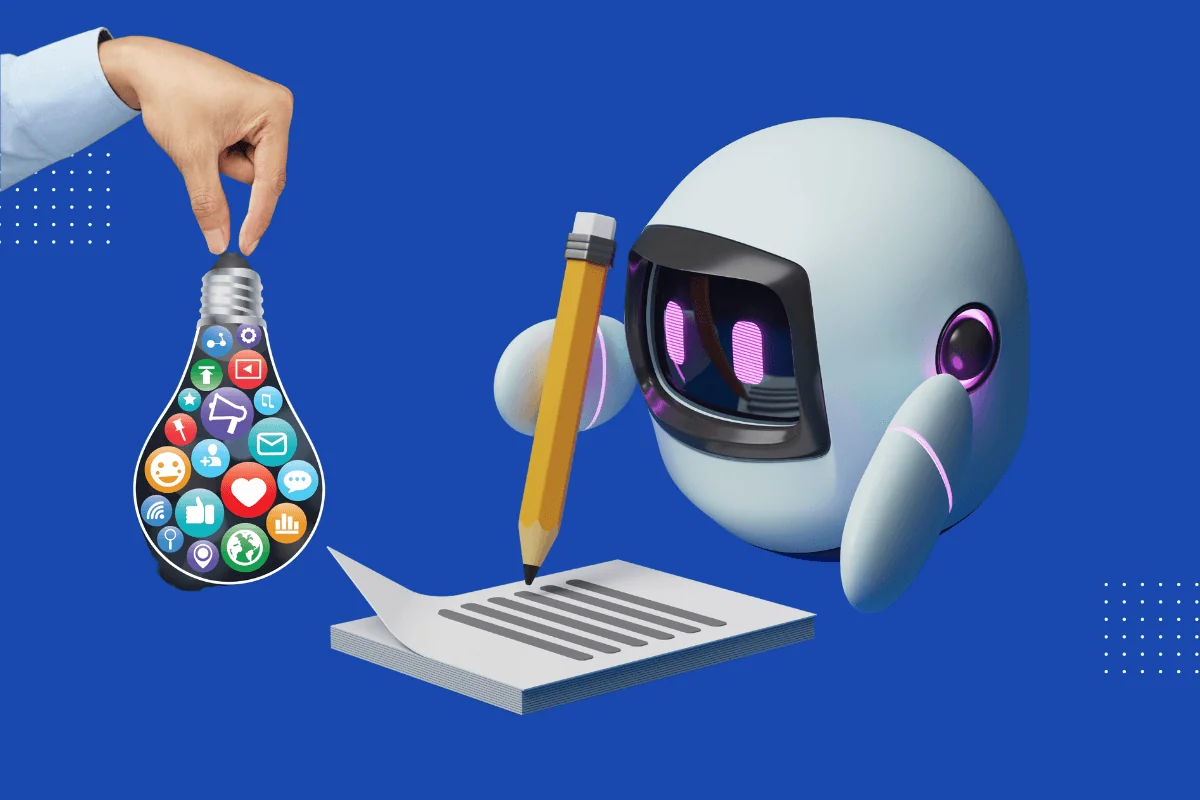
From Reactive Tools to Creative Collaborators
Early AI was reactive. It executed instructions. It produced outputs. A design team could request ten logos, and the AI would deliver. A writer could ask for a draft, and the AI would comply. But outputs were static. They didn’t improve themselves. They didn’t challenge assumptions. They didn’t propose something unexpected.
Generative AI changes that. It can generate multiple concepts, evaluate them against set criteria, and suggest alternatives. It can combine ideas from different domains—text, images, music—into entirely new creations. A single AI model may propose a slogan, a color palette, and a layout simultaneously. It doesn’t replace human creativity. It expands it.
Why Generative AI Drives Innovation
Innovation depends on exploration, iteration, and synthesis. Generative AI solutions accelerate all three.
1. Exploration – AI can produce hundreds of variations in minutes. A writer doesn’t need to brainstorm dozens of ideas manually. A designer doesn’t need to sketch every concept by hand. AI surfaces options humans might overlook.
2. Iteration – Refinement becomes almost instantaneous. A draft can be rewritten, improved, and reimagined multiple times in seconds. Feedback loops are shortened. Creativity cycles accelerate.
3. Synthesis – AI can merge concepts from different sources. A marketing slogan might blend cultural trends, competitor insights, and brand values automatically. Complex combinations become feasible at scale.
These capabilities make AI not just a productivity enhancer but a driver of entirely new creative possibilities.
Multi-Step Creativity in Action
Complex projects require more than single-step outputs. Multi-step reasoning, iterative review, and cross-domain integration are essential. Generative AI workflows can mirror this complexity.
Imagine a product launch campaign. A single AI model might create a draft tagline. But innovation requires more: mood boards, campaign concepts, social media hooks, and email sequences. Different AI agents can handle different tasks:
- Idea Generation Agent – Produces multiple taglines, slogans, and concepts.
- Review Agent – Evaluates tone, coherence, and brand alignment.
- Multi-Modal Agent – Generates visuals, video snippets, and interactive content.
Each agent specializes. Each contributes. Context is passed between them. Collaboration emerges. Outputs become richer, more coherent, and more innovative than any single model could produce alone.
Even when limitations appear—repetition, minor inconsistencies, or style mismatch—the workflow allows for refinement. One agent identifies problems. Another corrects them. The result is creativity at scale.
When AI Becomes a Creative Partner
The difference between reactive tools and true generative AI lies in initiative. A simple AI follows commands. A generative AI system suggests next steps. It asks, “What if this idea were combined with that one?” It evaluates multiple drafts before presenting options.
This shift transforms workflows:
- From single-output production → multi-option ideation
- From manual iteration → automated refinement loops
- From task execution → creative collaboration
In essence, AI moves from being an assistant to being a co-creator. It doesn’t replace human insight, but it extends it. Ideas that once required days or weeks of effort can now emerge in hours. Innovation cycles shrink. Creative boundaries expand.
How Generative AI Can Be Used Today
Harnessing this power requires structured approaches. Effective workflows include:
- Define Objectives Clearly – Specify what type of creativity is desired: marketing copy, visual designs, product concepts, or multimedia content.
- Use Iterative Prompts – Ask the AI to generate multiple alternatives, review them, and refine progressively.
- Integrate Specialized Models – Deploy multiple agents for generation, review, and enhancement to handle complex projects.
- Maintain Human Oversight – Human judgment ensures relevance, originality, and alignment with goals.
Practical applications are already visible:
- Marketing teams can generate campaign concepts, refine them, and test variations in hours rather than weeks.
- Designers can explore hundreds of layouts, color schemes, or interfaces with AI-assisted iteration.
- Writers can experiment with multiple storylines, narrative structures, or tones, rapidly identifying the most compelling version.
Limitations and Considerations
Generative AI is powerful, but not infallible. Errors, biases, and occasional incoherence are part of the process. Ethical questions about authorship, attribution, and responsible use must be addressed.
Human oversight remains critical. AI provides possibilities. Humans select which possibilities matter. AI can suggest a thousand ideas—but the judgment of which to pursue defines innovation.
The Future of Creativity
Generative AI is transforming creative landscapes. It accelerates ideation, enables iteration at scale, and unlocks novel possibilities. It allows experimentation without the constraints of time or manual effort.
In every industry, AI-driven creativity is redefining what is possible: product design, content creation, marketing, research, and entertainment are evolving faster than ever. Those who integrate AI into workflows can explore more ideas, iterate faster, and discover solutions previously unimaginable.
The evolution is clear: AI is no longer a passive tool. It is a catalyst for innovation. When approached as a collaborator, it transforms how humans imagine, create, and innovate.
Generative AI is shaping the future—not only in speed or efficiency, but in the very way creativity and innovation unfold.
