How Development Practices Are Evolving in the Age of AI
The software development sphere is experiencing a dramatic change. AI is no longer in the experimental stages and has found its way into the fabric of development practices in the modern world. AI is transforming the code development workflow, how developers collaborate and deliver creative solutions, and enhancing accuracy. Within this changing scene, it is noteworthy to discuss the role of AI in the development direction and the importance of traditional methods, such as front-end development, in this context.
 The Shift from Traditional to Intelligent Development
Manual Coding and Its Limitations
Traditional software development has been dominated by manual coding, where developers write every line of code by hand. This process is often coupled with repetitive testing, debugging, and incremental upgrades to improve software stability and functionality.
Time-Consuming: Writing and testing code manually can take weeks or even months, especially for large and complex projects. Each feature addition or bug fix requires careful crafting and validation.
Resource Intensive: Manual coding demands significant human resources — skilled developers spend many hours on routine tasks like writing boilerplate code, testing edge cases, and fixing bugs. This slows down the development cycle and increases costs.
Error-Prone: Despite careful testing, human errors in coding are common. Simple typos, logic errors, or overlooked edge cases can cause bugs that affect software quality.
Scalability Challenges: As projects grow, maintaining and upgrading legacy code becomes more difficult. Incremental upgrades often lead to technical debt, making future development even slower.
AI-Powered Code Generation
With advancements in Artificial Intelligence (AI) and machine learning, software development is undergoing a transformation toward intelligent automation.
Code Prediction and Generation: AI-powered tools can now analyze large datasets of existing code and learn programming patterns. They assist developers by predicting the next lines of code or even generating entire functions based on a brief description or existing code context.
Bug Detection and Fixes: These tools can automatically identify potential bugs, vulnerabilities, or performance issues by comparing current code against learned patterns and known best practices. Some systems also suggest fixes or improvements, accelerating debugging.
Faster Development Cycles: By automating repetitive tasks such as writing boilerplate code or generating unit tests, AI reduces the manual effort required. This cuts down project timelines dramatically, enabling teams to focus more on design, architecture, and creative problem-solving.
Reduced Human Error: Intelligent code generation minimizes trivial mistakes that typically occur during manual coding, leading to higher quality code and more stable releases.
Support for Large Projects: In large-scale projects where the codebase is massive, AI tools can analyze dependencies, refactor code, and ensure consistency across the entire system much more efficiently than humans alone..
Enhancing Collaboration Through AI
Smarter Project Management
Software development can hardly be an individual endeavor. There should be co-ordination between teams consisting of designers, engineers, testers, and business stakeholders. The project management systems based on AI can study the allocation of tasks and suggest possible bottlenecks, as well as how to optimize the resources.
Bridging Design and Development
Using front-end development in conjunction with back-end services as an example, AI applications may automatically point out an inconsistency between the design and functionality, and indicate them before they lead to delays. This is a proactive strategy that will provide a smoother collaboration and adjust technical elements to business objectives.
 AI and the Evolution of Front-End Development
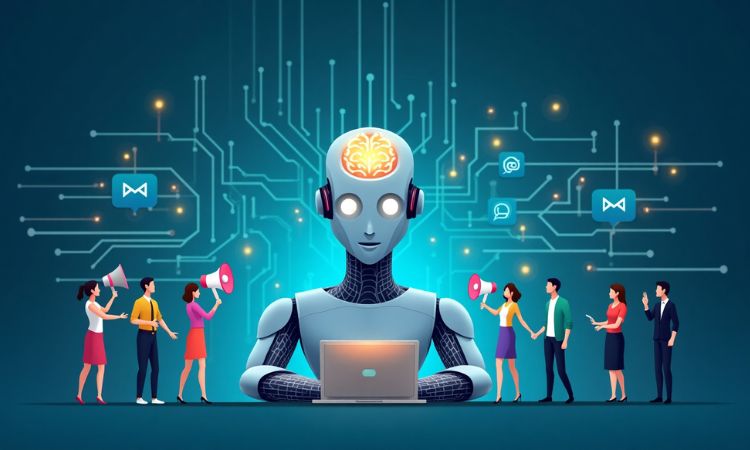
User experience (UX) largely depends on the quality and design of the front-end — the part of the software that users directly interact with. Traditionally, front-end development focused on building static or moderately interactive interfaces such as buttons, menus, and forms. However, with the rise of AI, front-end development has evolved into crafting smarter, more dynamic, and personalized interfaces.
What makes these interfaces smarter?
Dynamic Interaction: Instead of simply displaying information, AI-powered front-ends can adapt in real-time to user behavior, preferences, and context. For example, an interface can change its layout, suggest options, or modify content based on how a user interacts with it.
Personalization: AI analyzes user data and patterns to deliver customized experiences. This could mean recommending content, adjusting settings automatically, or even altering the way information is presented to match individual user needs.
Natural Language Processing (NLP): NLP enables interfaces to understand and process human language inputs. This allows users to interact using voice commands or conversational text rather than just clicks or taps, making the interface more intuitive and accessible.
Computer Vision: This technology allows interfaces to interpret visual data like images or gestures. For example, an app might recognize facial expressions to gauge user emotions or interpret hand movements as commands.
Responsiveness: AI-driven interfaces are more responsive because they can anticipate user needs and react quickly. For instance, predictive text suggestions or real-time error detection improve overall usability.
Chatbots and AI Integration
Chatbots have become one of the most visible and practical applications of AI in front-end development. Unlike traditional chatbots that followed rigid, predefined scripts, modern AI-powered chatbots use machine learning and natural language processing (NLP) to understand and respond to users in a more natural, flexible, and context-aware manner.
Key Features of AI-Based Chatbots:
Learning from Interactions: AI chatbots continuously learn from conversations. They analyze user inputs, identify intents, and improve their responses over time. This learning capability enables chatbots to handle a wide variety of queries—even those not explicitly programmed—resulting in conversations that feel more human-like and less robotic.
Context Awareness: Advanced chatbots remember context within a conversation, allowing them to provide relevant and coherent answers as the dialogue progresses. For example, if a user asks about a product and later requests information about its price, the chatbot understands the connection and provides accurate details without needing repeated clarifications.
Multimodal Interaction: Beyond text, some chatbots integrate voice recognition and synthesis, allowing users to speak naturally and receive spoken replies. This multimodal capability enhances accessibility and user convenience.
Seamless Integration with Front-End Interfaces: For chatbots to be effective, front-end developers must design interfaces that go beyond simply displaying text responses. The interface should support smooth interaction flows, quick feedback, typing indicators, message history, and error handling. It should also facilitate interaction with the underlying AI engine—sending user inputs in the right format, receiving responses, and updating the UI accordingly.
Improved User Engagement: Because AI chatbots provide timely, personalized, and accurate responses, they increase user satisfaction and engagement. They are used for customer support, sales assistance, booking systems, and many other applications where instant, intelligent interaction is valuable.
Implications for Front-End Development
Design for Flexibility: Developers must build adaptable interfaces that handle varying lengths of responses and unexpected user inputs gracefully.
Real-Time Communication: Interfaces should support real-time message exchanges, including visual cues like typing indicators or read receipts, to mimic natural conversation.
Error Handling and Recovery: Since AI chatbots might occasionally misunderstand users, interfaces should provide ways to clarify, redirect, or escalate conversations smoothly.
Data Privacy and Security: Chatbot interfaces must ensure secure handling of user data, especially when dealing with sensitive information..
Smarter Testing and Quality Assurance
Traditional Testing Challenges
Testing is a crucial phase in the software development lifecycle aimed at ensuring that the software behaves as expected and is free from defects. Traditionally, this process has heavily relied on manual efforts, particularly in writing and executing test cases.
Manual Test Case Creation
Exhaustive Test Case Writing: Developers and QA engineers needed to anticipate and write detailed test cases covering every possible scenario, input variation, and edge case. This manual effort was time-consuming and required deep domain knowledge as well as thorough understanding of the application’s behavior.
Inherent Limitations and Human Error: Despite best efforts, manually written test cases often missed important scenarios due to oversight, miscommunication, or simply the vast number of possible input combinations. This left gaps in coverage where bugs could hide undetected.
Inconsistencies: Different testers might write test cases with varying levels of detail, clarity, and rigor, leading to inconsistencies in test quality and execution. This made it difficult to maintain uniform standards across the testing process.
AI-Powered Testing Tools
With the increasing complexity of software systems and the limitations of traditional manual testing, AI-powered testing tools have emerged as a powerful solution to enhance and automate the testing process. These tools leverage artificial intelligence and machine learning techniques to improve efficiency, accuracy, and coverage in software testing.
Key Capabilities of AI-Powered Testing Tools
Automatic Test Case Generation: One of the biggest advancements AI brings to testing is the ability to automatically generate test cases. Instead of relying on developers or testers to manually write every test scenario, AI analyzes the application’s code, usage patterns, and historical bug data to create comprehensive test cases that cover common and edge-case scenarios.
Code Analysis: AI tools can scan source code and infer logical paths, dependencies, and workflows to design test cases that exercise various conditions.
User Behavior Insights: By analyzing real user interactions (e.g., from logs or analytics), AI identifies the most common user journeys and prioritizes test cases accordingly.
Adaptive Test Suites: AI continuously updates and optimizes test cases based on new code changes and test outcomes, ensuring the testing process remains relevant and efficient.Environment Simulation and Testing: AI-driven tools can simulate multiple runtime environments and configurations automatically. This is particularly valuable for testing front-end applications that must work seamlessly across different:
Browsers: Chrome, Firefox, Safari, Edge, and others have subtle differences in rendering and behavior.
Devices: Desktops, tablets, smartphones, each with varying screen sizes, resolutions, and input methods.
Operating Systems: Windows, macOS, Android, iOS, and their different versions.Simulating these diverse environments manually is cumbersome, but AI-powered tools can automate the process, running tests across multiple conditions in parallel, identifying compatibility issues early.
Predictive Failure Analysis: AI models use historical defect data, code complexity metrics, and test results to predict areas of the software most likely to fail. This predictive insight helps testers focus on high-risk components, prioritize testing efforts, and allocate resources efficiently.
For example, if a certain module has historically had many bugs, AI can flag it for more rigorous testing in the current cycle.Automated Visual Testing for Front-End: Front-end user interfaces require consistent appearance and behavior across platforms. AI-powered visual testing tools automatically capture screenshots or UI snapshots during tests and compare them pixel-by-pixel against baseline images.
These tools can detect visual glitches such as layout shifts, color changes, missing elements, or font inconsistencies.
AI enhances this process by intelligently ignoring irrelevant differences (like dynamic content or animations), reducing false positives.
Automated visual testing is critical for maintaining brand consistency and delivering a smooth user experience across browsers and devices.
Continuous Testing and Integration: AI testing tools integrate with modern CI/CD (Continuous Integration/Continuous Deployment) pipelines, allowing automated tests to run on every code commit or build. This supports rapid feedback loops, catching defects early in development and enabling faster releases.
Data-Driven Development
Analytics Over Assumptions
One of the defining features of AI is its reliance on data. Development practices are increasingly data-driven, where decisions are based on analytics rather than assumptions.
Optimizing User Experience
By analyzing user behavior and performance metrics, AI tools guide developers on which features to prioritize. For front-end developers, this means optimizing interfaces for speed, accessibility, and overall usability.
Ethical Considerations in AI-Driven Development
Transparency and Fairness
As with any technological shift, integrating AI into development comes with ethical concerns. Developers must ensure that AI systems are transparent, fair, and free from biases.
Accessibility and Inclusivity
When designing AI-driven interfaces, front-end developers must consider accessibility. Ensuring features work equally well for all users, regardless of ability, is crucial for building trustworthy digital solutions.
The Future of Development in the AI Era
Expanding Skill Sets
Looking ahead, developers will rely more heavily on AI assistants for coding, testing, and deployment. At the same time, human creativity will remain irreplaceable, particularly in front-end development, where design and usability are key.
Interdisciplinary Collaboration
AI will continue to blur the lines between design, engineering, and analytics. Future developers will need to understand not just code but also AI models, ethics, and user psychology.
Conclusion
This epistem of AI is transforming the practice of development across the board, planning and code writing, testing and application. There are numerous processes which have been automated, are more intelligent and are driven with data insights and this has made development quicker and more efficient. However, despite the rise of AI, the aspect of human touch is still critical, especially in front-end development where innovation and design experience are the determining factors.
Focusing on users by still adopting AI and not losing sight of their needs, developers may create systems that are not only good in technical terms, but also reliable and effective. The developmental changes that have come with the era of AI is still in its early stages and the possibilities available are immense to the person who is willing to change.