

Can AI Replace Marketing Teams? The Future of Marketers
Artificial Intelligence (AI) is reshaping industries across the globe, and marketing is no exception. As businesses race toward digital transformation, one pressing question looms larger than ever: Can AI replace marketing teams?
This question reflects the fear and curiosity many marketers feel today. With AI’s capacity to automate tasks, personalize customer experiences, analyze massive datasets, and even generate content, it’s easy to imagine a future where human marketers might become obsolete.
However, the future of marketing isn’t a binary outcome of humans versus machines. Instead, it’s evolving into a sophisticated collaboration where AI augments human creativity, strategy, and empathy.
This article explores how AI is changing the marketing landscape, whether it could fully replace marketing teams, and what the future holds for marketers.
The Current Impact of AI on Marketing
In 2026, marketing looks vastly different from what it was even five years ago. AI is already embedded deeply into many marketing practices, including:
- Content Creation: AI tools like Jasper, Copy.ai, and ChatGPT generate blog posts, social media captions, ad copies, and email newsletters.
- SEO Optimization: AI algorithms predict search trends, suggest keywords, and even optimize content structure to enhance rankings.
- Data Analysis and Predictive Analytics: Platforms like Salesforce Einstein and Adobe Sensei crunch data at speeds impossible for humans to match, offering real-time insights.
- Customer Segmentation and Personalization: AI identifies micro-segments within audiences, delivering hyper-targeted marketing messages that increase engagement and conversions.
- Chatbots and Customer Service: AI-powered bots provide 24/7 customer support, answer queries instantly, and even resolve complex issues without human intervention.
Key Insight:
AI in workplace is not just supporting marketing teams; it’s redefining marketing fundamentals. But does this mean complete replacement is inevitable?
What AI Can (and Can’t) Do in Marketing
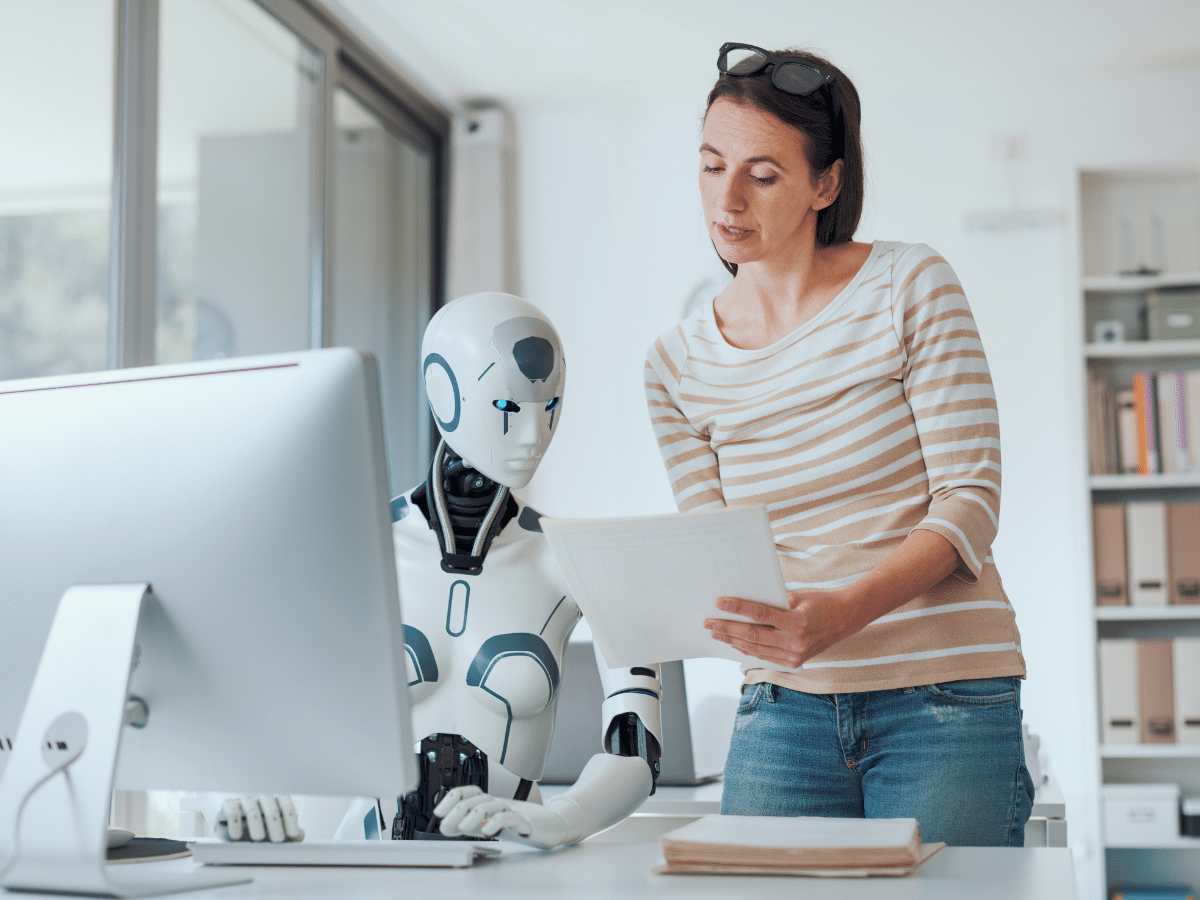
What AI Excels At:
- Repetitive Task Automation:
AI shines at automating repetitive tasks like sending drip campaigns, scheduling posts, analyzing CTRs, and A/B testing ad creatives.
- Data Processing and Analysis:
AI analyzes enormous datasets faster than any human, ai providing actionable insights that drive decisions on customer behavior, buying trends, and campaign performance.
- Content Personalization at Scale:
AI can dynamically personalize website experiences, product recommendations, and email content for millions of users simultaneously.
- Predictive Modelling:
AI predicts future consumer behaviors, enabling proactive marketing strategies rather than reactive ones.
- Ad Optimization:
AI optimizes ad placements in real-time across platforms, ensuring maximum ROI by bidding smartly and targeting the right audiences.
What AI Struggles With:
- Emotional Intelligence:
Understanding human emotions deeply — something fundamental to brand loyalty and storytelling — remains a human strength.
- Strategic Thinking:
While AI can suggest tactics based on data, holistic, creative long-term strategic planning still requires human intuition.
- Cultural Sensitivity and Context:
Marketing messages must often be adapted for cultural nuances — an area where AI can falter if not carefully supervised.
- Brand Voice and Identity:
Maintaining a consistent, authentic brand voice across campaigns needs a level of creative continuity that AI is yet to master fully.
- Innovation and Experimentation:
Humans can think outside the box, inventing new trends, campaigns, and experiences that aren’t based on existing data patterns.
AI is a powerful tool, but it lacks the emotional, cultural, and strategic nuance that human marketers bring to the table.
Will AI Replace Marketing Teams?
The Realistic Scenario: Augmentation, Not Replacement
According to recent studies from Gartner and McKinsey (2025 reports), while AI will automate up to 40-50% of marketing activities, full replacement of marketing teams is highly unlikely. Instead, we’ll witness AI-augmented marketing teams where humans and machines collaborate to achieve better outcomes.
- AI will handle data-heavy and operational tasks.
- Humans will lead strategy, creativity, emotional engagement, and ethical considerations.
The future marketer will not just be a creative mind but a technologically adept professional who understands how to leverage AI for maximum impact.
Key Marketing Roles that AI Could Redefine:
| Traditional Role | Evolving into | Skills Needed |
| Content Writer | Content Strategist & Editor | AI Prompt Engineering, SEO Mastery, Storytelling |
| Data Analyst | Marketing Data Scientist | AI/ML Interpretation, Data Storytelling |
| SEO Specialist | AI-SEO Architect | Algorithm Understanding, Human-centered Content |
| Social Media Manager | Community Engagement Specialist | AI Chatbot Oversight, Human Relationship Building |
| Ad Manager | AI Campaign Orchestrator | Real-Time Data Optimization, Strategic Oversight |
The Future of Marketers Beyond 2026
New Skills Marketers Must Master:
- AI Literacy:
Understanding how AI tools work — not coding them, but knowing their logic, limitations, and optimal usage. - Prompt Engineering:
Crafting inputs for AI models to produce high-quality outputs will be a crucial skill (especially in content creation and customer interaction). - Strategic Thinking:
Human marketers must focus on long-term brand vision, customer empathy, and market innovation. - Creative Storytelling:
Compelling stories will differentiate brands more than ever, as consumers seek genuine emotional connections. - Ethical Marketing:
Marketers will play a key role in ensuring AI-driven practices remain ethical, inclusive, and transparent. - Cross-disciplinary Collaboration:
Marketers will increasingly work alongside data scientists, developers, product teams, and customer success units.
The Rise of “Marketing Engineers”
One emerging trend and beyond is the rise of Marketing Engineers — hybrid professionals with marketing, tech, and analytical skills who bridge the gap between creativity and computation.
These professionals will:
- Build customer journey automation pipelines.
- Design AI-driven personalization frameworks.
- Translate brand visions into machine-readable strategies.
Risks and Ethical Concerns of Relying on AI in Marketing
- Loss of Authenticity:
Overreliance on AI can lead to generic content that lacks brand soul. - Privacy Issues:
AI-driven hyper-personalization can easily cross privacy boundaries if not monitored carefully, leading to consumer distrust. - Algorithm Bias:
AI systems trained on biased datasets can inadvertently produce discriminatory or tone-deaf messaging. - Job Displacement Anxiety:
While new marketing roles will emerge, some traditional roles may vanish, leading to transitional challenges. - Regulatory Compliance:
Governments are implementing stricter regulations (like the EU AI Act and U.S. AI Regulations) that marketers must comply with while using AI.
Best Practices Moving Forward:
- Always prioritize human oversight.
- Ensure transparency with customers about AI usage.
- Invest in upskilling and ethical marketing practices.
- Continuously audit AI systems for bias and errors.
Conclusion
So, can AI replace marketing teams? The simple answer is no, but it will transform them.
In the coming years, AI will take over the mechanical aspects of marketing, while humans will double down on creativity, strategy, innovation, and empathy. Those marketers who embrace AI as a powerful ally, rather than fear it as a replacement, will thrive.
The future belongs not to those who resist technology but to those who master the art of human-AI collaboration. Marketers who stay flexible, continuously learn, and lead with authenticity will not only survive — they will own the future of marketing.
